Cherry Blossom in Japan 2027: When and Where to See It
Bloom times by region, the best spots in Tokyo, Kyoto and Osaka, quieter alternatives, hanami food, and when to book your hotel and flights.
Does any of this apply to you?
Pick one or more and we will show extra notes in the article.
US dollar amounts are rounded estimates at US$1 = ¥159 (as of 26 November 2026). The actual rate varies.
Cherry blossom season (sakura) is the most popular time to visit Japan – and the most expensive. If you want to go in spring 2027, now is the time to plan. Here is when the trees bloom where, which places are worth it, and how to avoid the worst crowds and prices. If you already know Tokyo and Kyoto, see the quieter alternatives further down.
When will the cherry trees bloom in 2027?
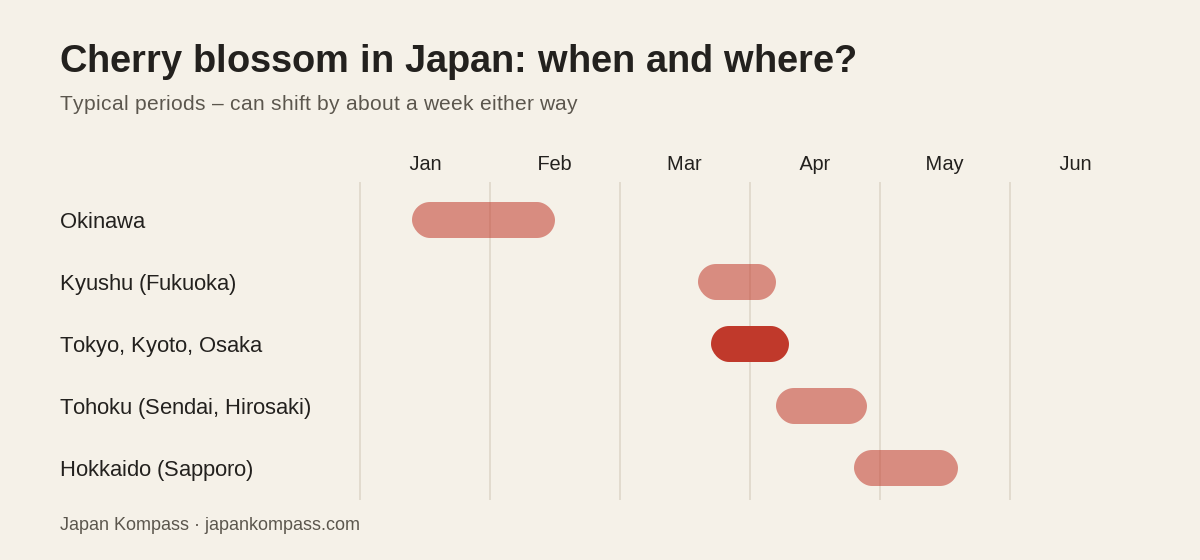
The blossom moves through the country from south to north. On the classic Tokyo–Kyoto–Osaka route, the peak usually falls between late March and early April.
What matters for planning:
- From first flowers to full bloom takes about 1 week. Full bloom then lasts roughly another 1 week – rain or wind can shorten it.
- Exact dates shift by about 1 week either way depending on the winter. A date that was perfect one year can be too early the next.
- Forecasts for 2027 are published by Japanese weather services from January and updated into spring. The national weather agency itself no longer issues a forecast; it only reports the actual start of the bloom.
- Cherry blossom season overlaps with cedar and cypress pollen season. If you have hay fever, bring the medicine you normally use. Masks and eye drops are also easy to buy in Japanese drugstores.
Our tip: plan at least 10 days in the core period and don’t pin a specific place to a single day. If the blossom is over in Tokyo, it has often only just started further north.
The best places
Most cherry blossom spots are free. You pay, for example, at Shinjuku Gyoen (adults ¥500 ≈ US$3), some temples and Himeji Castle. Wherever you go, early mornings and weekdays are much less crowded.
Tokyo
- Chidorigafuchi: the moat by the Imperial Palace, lined with cherry trees. Best seen from a rowing boat – expect long queues.
- Meguro River: cherry trees along both banks, lit up in the evening. Very busy, especially at weekends.
- Shinjuku Gyoen: a large park with many varieties, so the season lasts longer. Paid entry and no alcohol – which makes it calmer than other parks. During the 2026 bloom, online reservations were required on some days; check the official website for 2027.
- Ueno Park: the classic spot for hanami (picnics under the blossoms) – loud, lively and packed.
Kyoto
During cherry blossom season Kyoto’s city buses are packed, and sometimes you cannot get on at all. On weekends and holidays, “sightseeing express buses” (adults ¥500 ≈ US$3) also run from Kyoto Station to the main sights. Check the 2027 schedule with the Kyoto City transport bureau.
- Philosopher’s Path: a canal-side walk lined with cherry trees. Go early in the morning while it is still quiet.
- Maruyama Park: known for a large weeping cherry that is lit up in the evening.
- Arashiyama: blossoms by the river with mountains behind. Very busy during the day; easy to combine with the bamboo grove.
- Daigo-ji: a temple complex in the south-east of the city, famous for its cherry trees. Less central, but impressive.
Osaka and around
- Osaka Castle: thousands of cherry trees surround the castle grounds.
- Himeji Castle: a white castle framed by blossoms – one of Japan’s most famous views. An easy day trip from Osaka or Kyoto. Since March 2026, entry costs ¥2,500 (≈ US$16) for adults who don’t live in Himeji (free under 18).
- Yoshino (Nara Prefecture): a whole mountain of cherry trees that bloom in stages from bottom to top. Usually a little later than Kyoto, so ideal if you arrive too late there.
Quieter alternatives
If you travel later or want to avoid the crowds:
- Hirosaki (Aomori Prefecture): a castle park with thousands of cherry trees and moats covered in petals. Peak usually late April.
- Kakunodate (Akita Prefecture): a samurai district with old weeping cherries, also late April.
- Sapporo and Hokkaido: blossom usually around early May.
With these you can “chase the blossom” from late March to early May. Many spots have few places to sit, so plan regular breaks.
When should you book?
During cherry blossom season, hotels in Tokyo and especially Kyoto fill up fast and prices rise sharply.
| What | Recommendation |
|---|---|
| Flights | As early as possible: 4–6 months ahead for long-haul, 2–3 months ahead even for short flights from Asia |
| Hotels in Kyoto | As soon as your dates are fixed – Kyoto is the bottleneck |
| Hotels in Tokyo and Osaka | At least 3 months ahead |
| Shinkansen | Seat reservations usually open about 1 month ahead |
Kyoto trick: stay in Osaka. The train gets you to Kyoto in about 30 minutes, and there are more hotels, often for less.
Hanami food
- The easiest way to get hanami food is from a convenience store or a department store food hall. Packaged products carry allergen labels.
- Food from stalls and dishes sold loose are usually not labelled, and dishes such as yakisoba or takoyaki almost always contain meat, seafood or bonito flakes. If you have dietary restrictions, buy your food in advance and bring it along.
Hanami etiquette
- Don’t shake or break branches – not even for a photo.
- Take your rubbish with you. Many parks have very few bins.
- Spots covered with blue tarps have often been reserved by groups since the morning. Don’t sit on them.
- Some parks have alcohol bans or evening closing times. Check the signs on site.
- Many cities ban smoking in parks and on the street. Don’t smoke at your hanami spot; use designated smoking areas.
In short
- Peak in Tokyo, Kyoto and Osaka: usually late March to early April.
- Detailed forecasts from January 2027.
- Plan 10 days or more and stay flexible.
- Book Kyoto first, or stay in Osaka.
- Too late? Head north: Hirosaki, Kakunodate, Hokkaido.
Last checked: November 2026. Bloom times are averages and can shift every year.